
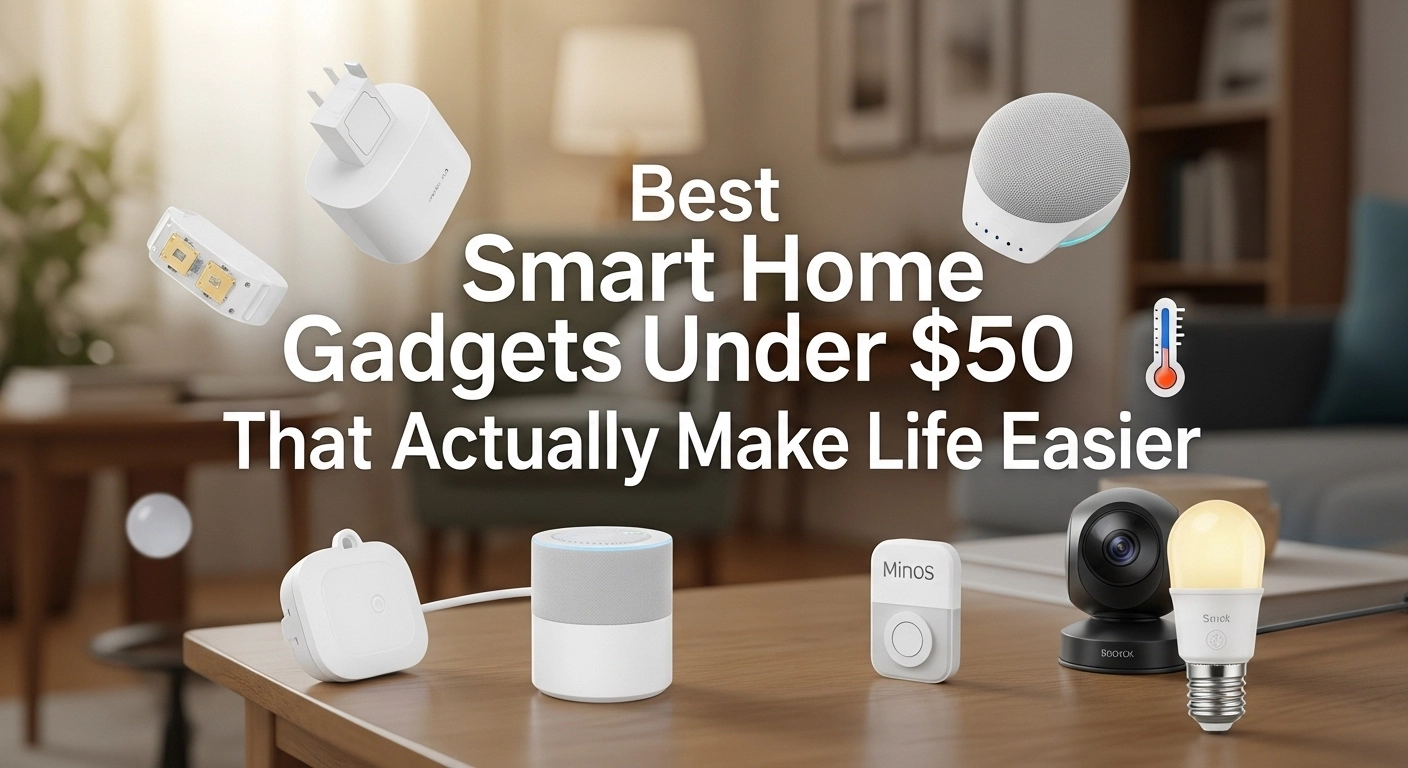
Smart homes have a reputation for being expensive. Fancy doorbells, flagship vacuums and designer lighting systems can quickly push the cost of a modest setup into the thousands. In reality, some of the most useful smart home gadgets in 2026 cost less than a meal out. These are the little devices that genuinely change daily routines, and they belong in almost every home, not just tech enthusiasts’ ones.
Thank you for reading this post, don't forget to subscribe!This guide rounds up the best smart home gadgets under $50 that are actually worth buying. Every pick here has been chosen on the basis of real-world helpfulness, ease of setup and long-term reliability. No disposable gimmicks, no empty boxes.
Smart Plugs — The Gateway Gadget
A good smart plug costs $8 to $15 and does more than it has any right to. Brands like TP-Link Tapo, Meross and Amazon’s own plugs all offer reliable products at this price. Schedule your lamps, automate the coffee machine, control space heaters safely and monitor energy use from your phone.
Some models under $20 even include energy monitoring, which pays for itself on a single old appliance you did not realise was costing you a fortune to run. Start here if you are new to smart homes.
Smart Bulbs — Instant Mood Setting
A single colour-changing smart bulb costs around $10 to $20. Replace the bulb in your lamp, connect it to Wi-Fi through the app, and you suddenly have dimmable, schedulable, voice-controllable light at your fingertips. Tapo, Wiz, and Ikea Tradfri are all excellent value.
The sweet spot for most homes is a mix of warm white bulbs in bedrooms, tunable white in kitchens and living areas, and one or two colour bulbs for atmosphere. You do not need to replace every bulb. Even two in the right rooms will feel like a serious upgrade.
Amazon Echo Dot or Google Nest Mini — Tiny but Mighty
For under $40 at list price and often $25 on sale, the Echo Dot and Google Nest Mini are remarkable value. A smart speaker becomes the hub of a modest smart home. Turn on lights by voice, set timers while cooking, check the weather before walking the dog and play radio or music on demand.
One in the kitchen and one in the bedroom covers most daily needs. For older users who find phone apps tricky, a voice assistant is often the easiest way into smart home control. No screen, no fiddly taps, just a spoken command.
Motion Sensors — Hallways That Light Themselves
Small battery-powered motion sensors from Aqara, SwitchBot, Philips Hue and Hive cost around $15 to $25. Pair one with a smart bulb or plug, and your hallway, stairwell or bathroom will light up automatically at night, then switch off after a short delay.
This is one of those tiny upgrades that changes night-time life. No more stubbed toes, no more feeling for a switch with an armful of laundry. Set the brightness low for overnight use and your family will stop noticing the technology entirely.
Mini Security Cameras — Quiet Peace of Mind
Indoor cameras from Tapo, Eufy and Reolink start around $25. You get a 1080p or 2K feed, motion alerts and two-way audio. Some include local microSD storage so there is no monthly fee. Perfect for checking on pets, an elderly parent, a delivery or a sleeping child.
Outdoor-ready models are usually a little more, but even under $50 you can get a solid weatherproof option. Mount one covering the front path or side gate and you have visible deterrence that pays off quickly.
Smart Thermostatic Radiator Valves — A Sensible Upgrade
If a full smart thermostat is out of reach, smart TRVs from Tado, Aqara, Netatmo and SwitchBot start around $35 to $50 per valve. They replace the manual dial on your radiator and let you schedule each room independently from your phone.
They are a brilliant way to heat only the rooms you use when you use them. Over a winter, even a couple of valves on bedrooms can save you meaningful money and make the house more comfortable. Add more over time as budget allows.
Video Doorbell Alternatives — Smart Knockers
Under $50, a full video doorbell is a stretch, but some budget wireless doorbells now include a camera and live feed. Models from Tapo and Aqara sit in this range. They are not as polished as a Ring or Nest, but for a flat or rental where fitting wiring is impractical, they are excellent value.
Pair the chime with a smart speaker and you have a small but genuine video doorbell system for a quarter of the price of flagship kit.
Contact Sensors for Doors and Windows
Small magnetic contact sensors cost around $8 to $15. Stick one on your front door or a ground-floor window, and your phone will alert you the second it opens. They run on coin batteries for a year or more.
They are brilliant for peace of mind, for checking a teenager got home safely, or simply for reminding you that the fridge door has been left open too long. A pack of five sensors for under $50 gives you real household-level awareness.
Smart Remote — One Device, Every Appliance
Infrared smart remotes from SwitchBot and Broadlink cost $20 to $40. They learn the signals from every infrared remote in the house and let you control your TV, air conditioner, set-top box and older hi-fi through your phone or voice assistant.
For anyone with a pile of remotes on the coffee table, this one gadget is a small miracle. It even lets you ditch the voice remote entirely for most tasks.
Final Thoughts
You do not need deep pockets to build a smart home that actually improves your life. A handful of well-chosen gadgets under $50 each can make your mornings smoother, your evenings warmer and your home safer. Start with one or two, see what you use daily, and grow from there. The cheapest smart home gadgets are often the ones that end up mattering most, precisely because they solve real problems you did not realise you had.